ABOUT
Gallery JIB was founded from a simple observation: contemporary Korean artists remain underrepresented in many conversations about contemporary art in the UK, despite the richness and diversity of their practices.
Based in Oxford, the gallery introduces contemporary Korean artists through a programme of exhibitions, events, and private viewings. Particular attention is given to artists whose work rewards sustained looking and continued engagement over time.
Rather than representing a single style or generation, Gallery JIB seeks to present a range of artistic voices and perspectives. The gallery's programme reflects an interest in works that are thoughtful, distinctive, and capable of opening new ways of seeing.
Through exhibitions and ongoing dialogue, Gallery JIB aims to create opportunities for meaningful encounters between artists, artworks, and audiences.
The House
Gallery JIB occupies the ground floor of a detached house in Wolvercote, on the northern edge of Oxford.
Built in the 1990s and later extended through a loft conversion, the house has adapted over the years to the changing needs of family life. Today, its rooms serve multiple purposes: places to cook, read, gather, work, celebrate, and occasionally, exhibit art.
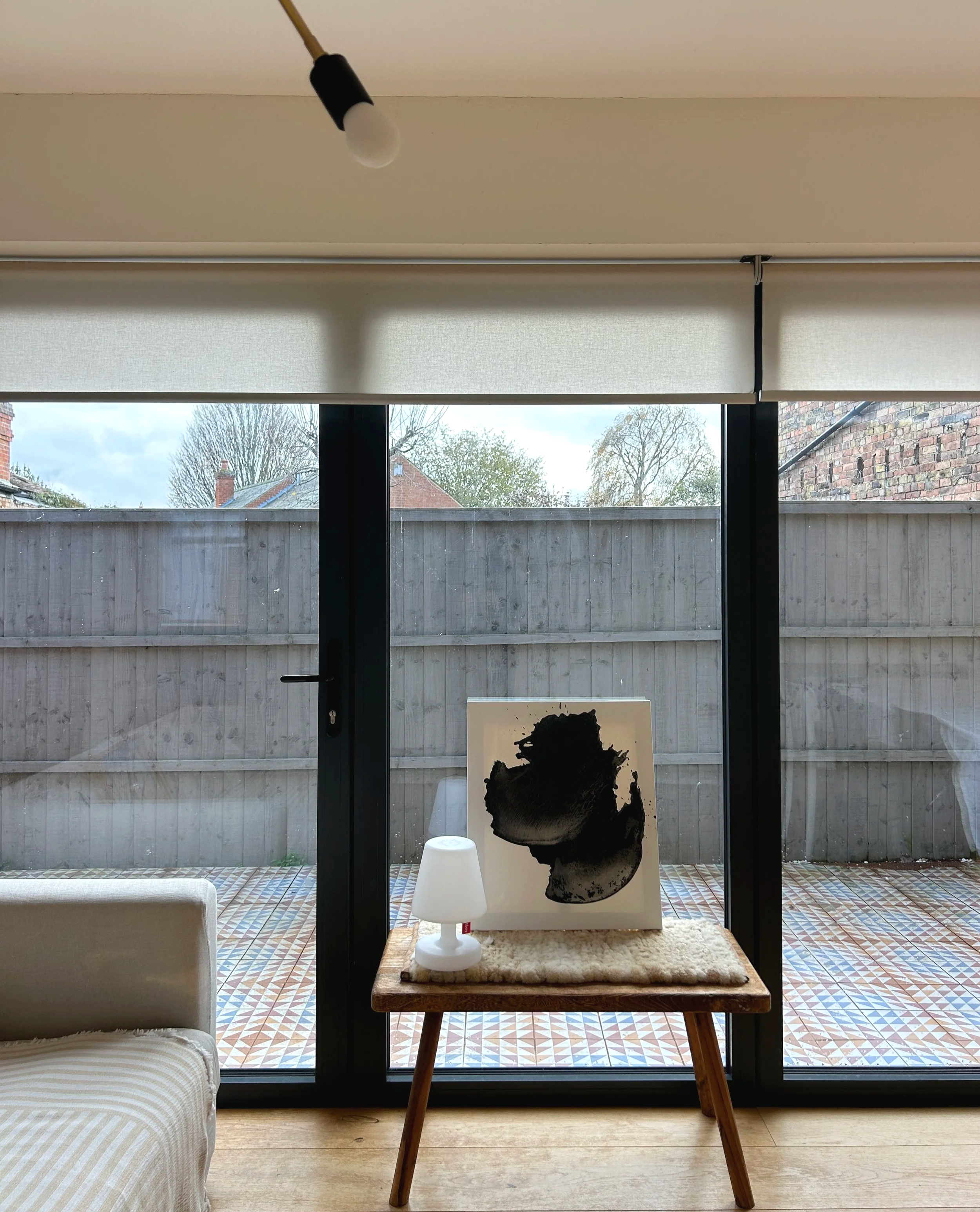
Rather than being arranged as a sequence of gallery spaces, the house retains the character of a home. Each room has its own atmosphere, shaped by light, furniture, books, objects, and daily routines.
The Dining Room
The largest exhibition space is a south-facing dining room and kitchen, where sunlight moves across the walls throughout the day. The room changes constantly: bright in the morning, quieter by late afternoon, and animated when family and friends gather around the table.
The Library
The library is a smaller and more enclosed room. Lined with books and centred around a piano, it offers a different pace and scale. Works shown here are often encountered at close range, in a setting designed for reading, listening, and lingering.
Beyond the Rooms
Artworks also appear in the spaces between destinations: along hallways, beside staircases, around corners, and near doorways. These transitional areas form part of the experience of moving through the house, allowing unexpected encounters to emerge naturally along the way.